DNA Sample Collection
Members may choose from a variety of methods to collect DNA samples.
Please follow the guides below to ensure the best results.
Tissue Samples
Tissue samples are becoming the sample collector of choice. Samples can be collected in seconds with minimal animal restraint using an Allflex Tissue Sampling Unit (TSU) and Allflex tissue units. A single-squeeze motion collects a sample with minimum distress to the animal. Clean, uncontaminated sampling. The genetic material is sealed in a specially designed preservative. Once the tissue sample has been successfully extracted, care should be taken to store the sample at room temperature and away from sunlight for up to a year. Allflex recommends freezing the sample after a year, for long term storage.
If you are using TSU samples and are sending a group of 10 or more you will need to submit an electronic list of the Animals Tattoos and the corresponding TSU Barcode. Please use the form below.
Additional Resources
Hair Samples
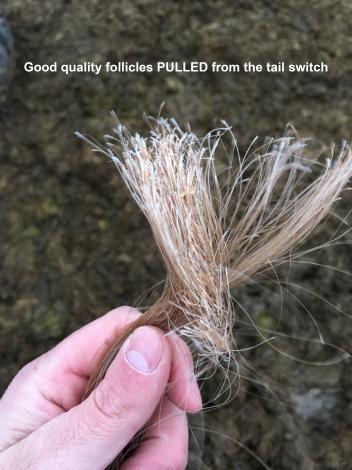
You can also submit DNA by pulling hair follicles from the tail switch. The root ends contain the DNA, therefore samples are to be pulled not clipped.
- Clean the tail switch to remove any foreign material. Comb or brush the tail to remove any dead hair. If needed, wash clean and rinse with water. Wait for the tail to be completely dry. The sample must be free of urine or manure. Dirty samples will not be processed as contamination will make the sample unfit for testing.
- Wrap approximately 5-10 strands of hair around a finger, about 2 inches away from the skin, and give a sharp pull.
- Inspect the hair to ensure that the follicles are attached. Hair strands without follicles do not contain DNA and cannot be tested.
- Repeat until you have obtained approximately 40-50 hair roots.
- Place the hair sample on the hair card. Please see hair card instructions.
- Place the sample in the envelope and immediately seal to minimize contamination. Ensure that the envelope has been filled out with the appropriate information identifying what animal the sample came from. Hair from only one animal is to be placed in each envelope.
If doing more than one animal, wash hands before starting on the next animal or use a clean pair of surgical gloves. This will reduce the risk of cross-contamination of the samples.
Blood Samples
Blood samples can also be used for DNA testing.
Two or three drops of blood are needed on the collector portion of the card (similar to hair cards). This can be collected from anywhere on the animal. Two locations for easy-to-find blood vessels are the ear and the underside of the tail.
- Appropriately restrain the animal.
- Locate a blood vessel, visually or by palpation.
- Clean the area so the sample is not contaminated with dirt or manure.
- Use a clean needle or lancet for every animal.
Blood can also be sampled with a syringe or blood tube from the vein on the underside of the tail. This may be easier than sampling blood from an ear vein that is covered with long, thick hair.
Collect two to three drops of blood on the collector portion of the collection card by allowing the blood to drip or squirt onto the card. Do not wipe the needle, ear or tail on the collection card. Discard the needle in an appropriate disposal container.
Before placing blood drops on blood cards, write an accurate customer name and animal ID in the spaces provided. Let the cards sit open and air dry before closing cover flap.
Semen Samples
Semen samples can be used for testing on bulls. Submit a straw of semen, placed in a secure package to avoid breakages in shipping
Storing & Submitting Samples
Refer to the PDF guide below for information on properly storing your samples.