
Performance Data Collection
These PDF guides can be downloaded or printed for your reference:
Performance Data Schedule
Members are encouraged to provide all performance data as per the following schedule:
|
AT BIRTH Within 24 hours |
Birth Weight | This information is used for the calculation of the birth weight EPD. |
| Calving Ease | U=Unassisted/Unobserved, E=Easy Pull, H=Hard Pull, M=Malpresentation, S=Surgical | |
| Dam's Udder Score | See chart below for scoring. | |
| AT WEANING(100-310 days of age) | Weaning Weight | This information is used for the calculation of the weaning weight EPD. |
| Calf's Temperament | See chart below for scoring. This information is the backbone of our unique Limousin docility EPD. | |
| Dam's Body Score | See chart below for scoring. | |
|
AT YEARLING(270-500 days of age, minimum 60 days post-weaning) |
Yearling Weight | This information is used for the calculation of the yearling weight EPD. |
| Scrotal Circumference | This information is important to secure accurate SC EPD. | |
| Carcass Ultrasound | Must be done by a certified technician and analyzed by an approved lab in order to be included in EPD calculation. |
NOTES:
Birth data should be recorded within 24 hours of birth. Contemporary groups here are important to enter, if you keep your first calf heifers separate from your mature cows and feed differently then it is important to note two separate groups for the calves.
Weaning weights should be entered between 100-310 days of age. It is a good practice to enter a management group on calves - calves that are managed together and have had equal opportunity to perform should be grouped together. It is also important to note if the calves had different feed (i.e. creep ration).
Yearling data should be entered between 270-500 days, at minimum 60 days post weaning. Feed code is important to enter, especially if you have creep fed, fed up for a show, etc. This all is important to factor into the EPD's.
Docility Scores
The docility score provided below is designed to subjectively evaluate differences in disposition when animals are processed through the squeeze chute. Because an animal's behavior can be influenced by past experiences, scoring should be conducted at weaning or yearling ages. This will reduce the extent to which current behavior has been influenced by prior handling experiences. Scores should be collected while calves are restrained with headgates but without having motion restricted by squeeze.
| 1 | Docile. Mild disposition. Gentle and easily handled. Stands and moves slowly during processing. Undisturbed, settled, somewhat dull. It does not pull on headgate when in chute. Exits chute calmly. |
| 2 | Restless. Quieter than average, but maybe stubborn during processing. May try to back out of chute or pull back on headgate. Some flicking of tail. Exits chute promptly. |
| 3 | Restless. Quieter than average, but maybe stubborn during processing. May try to back out of chute or pull back on headgate. Some flicking of tail. Exits chute promptly. |
| 4 | Flighty (Wild). Jumpy and out of control, quivers and struggles violently. May bellow and froth at the mouth. Continuous tail flicking. Defecates and urinates during processing. Frantically runs fence line and may jump when penned individually. Exhibits long flight distance and exits chute wildly. |
| 5 | Aggressive. May be similar to Score 4, but with added aggressive behavior, fearfulness, extreme agitation, and continuous movement which may include jumping and bellowing while in chute. Exits chute frantically and may exhibit attack behavior when handled alone. |
| 6 | Very Aggressive. Extremely aggressive temperament. Thrashes about or attacks wildly when confined in small, tight places. Pronounced attack behavior. |
If an animal has both a weaning and yearling docility score then the weaning score is used. The contemporary group is included as the group at weaning (if a weaning observation) or yearling (if a yearling observation). Only chute scores are used in genetic evaluations.
Udder Scores
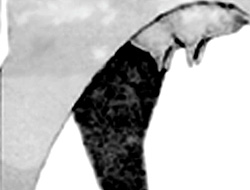
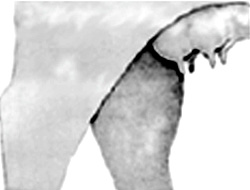
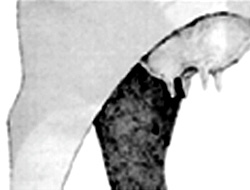
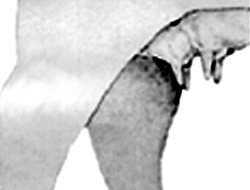
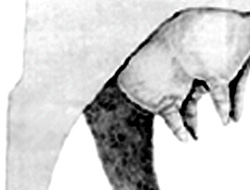
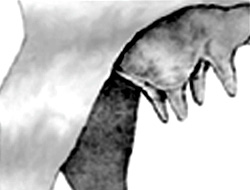
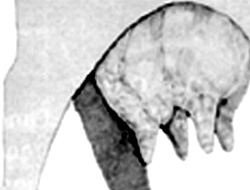
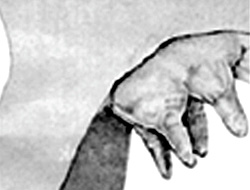
Udder and teat quality are among the most important functional traits of beef females. Unsound udders and teats are associated with reduced productive life and inferior calf performance, and poor udder and teat conformation is a major reason why cows are culled from the breeding herd. The scoring system described below is designed to help producers evaluate differences in udder and teat quality of beef cows.
Udder and teat scores should be taken within 24 hours after calving, preferably by one person and on the weakest quarter.
| Udder Suspension | Teat Size | |||
|---|---|---|---|---|
| 9 | Very Tight |
|
Very Small |
|
| 7 | Tight |
|
Small |
|
| 5 | Intermediate/Moderate |
|
Intermediate/Moderate |
|
| 3 | Pendulous |
|
Large |
|
| 1 | Very Pendulous, Broken Floor |
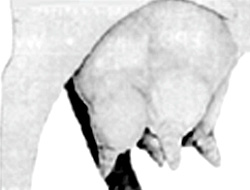
|
Very Large, Balloon Shaped |
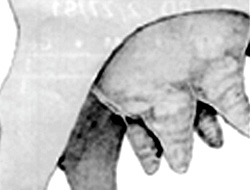
|
Body Condition Scores
Udder and teat quality are among the most important functional traits of beef females. Unsound udders and teats are associated with reduced productive life and inferior calf performance, and poor udder and teat conformation is a major reason why cows are culled from the breeding herd. The scoring system described below is designed to help producers evaluate differences in udder and teat quality of beef cows.
Udder and teat scores should be taken within 24 hours after calving, preferably by one person and on the weakest quarter.
| Score | Decription | Example | ||
|---|---|---|---|---|
| Thin | 1 | Emaciated | No palpable fat over spinous processes, transverse processes, hip bones, or ribs. Tail head and ribs project quite prominently. | |
| 2 | Poor | Tail head and ribs are less prominent. Individual spinous processes are still sharp to the touch, but some tissue cover on dorsal portion of ribs. | ||
| 3 | Thin | Ribs are individually identifiable, but not as sharp to the touch. Obvious palpable fat along spine and over tail head with some tissue cover on dorsal portion of the ribs. |
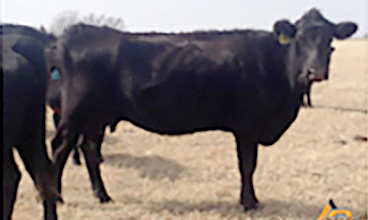
|
|
| Optimum/Moderate | 4 | Borderline | Individual ribs are no longer visually obvious. The spinous processes can be identified individually on palpation but feel rounded rather than sharp. Some fat cover over ribs, transverse processes, and hip bones. |
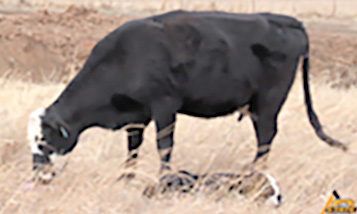
|
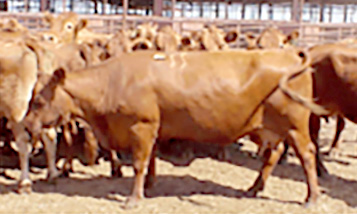
| 5 | Moderate | Cow has generally good overall appearance. On palpation, fat cover over ribs feels spongy and areas on either side of tail head have palpable fat cover. |
|
|
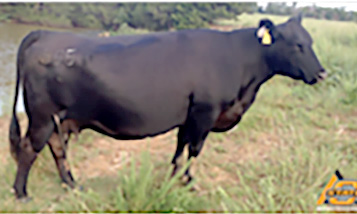
| 6 | High Moderate | Firm pressure required to feel spinous processes. A high degree of fat is palpable over ribs and around tail head. |
|
|
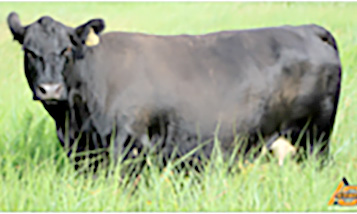
| Fat | 7 | Good | Very spongy fat cover over ribs and around tail head. "Pones" beginning to be obvious. Some fat around the vulva and crotch. |
|
| 8 | Fat | Cow very fleshy and over-conditioned. Spinous processes almost impossible to palpate. Cow has large fat deposits over ribs and around tail head, and below vulva. "Pones" are obvious. | ||
| 9 | Extremely Fat | Cow looks patchy and blocky. Tail head and hips buried in fat tissue and "pones" of fat are protruding. Bone structure no longer visible and barely palpable. Animal's mobility might even be impaired by large fatty deposits. | ||